
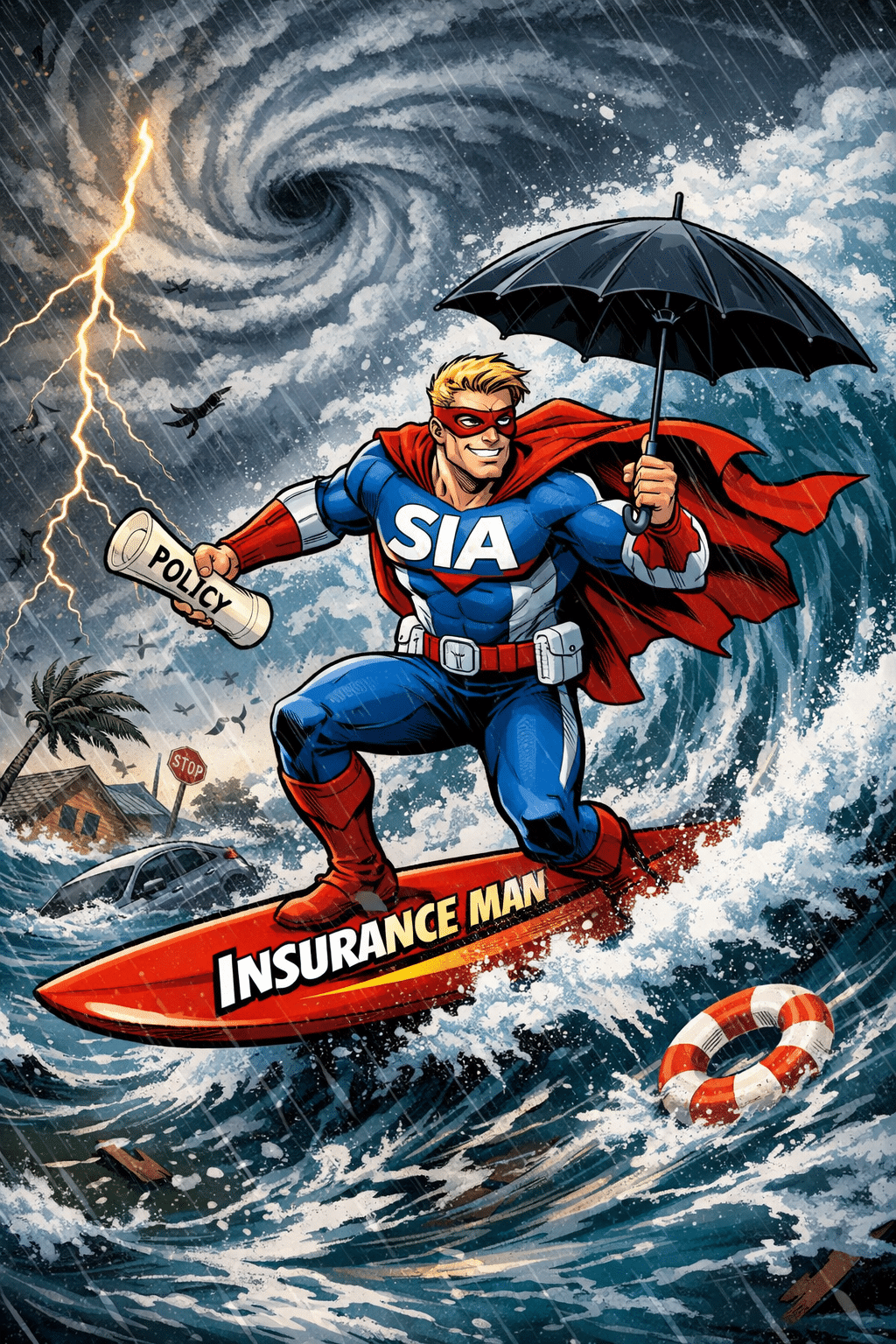
Because in Florida, even calm water has a little chop.
As we roll into a new calendar year, we want to help both existing and prospective clients set realistic expectations for the insurance market—especially here in coastal Florida. The good news? There actually is some relief out there. The less-good-but-still-manageable news? Relief in Florida insurance often comes with fine print, footnotes, and a moving target.
 The Good News: More Carriers Are Back
After several tough years, Florida has seen an increase in the number of property insurance carriers and programs, particularly for coastal homes. A big reason for this is regulatory reform aimed at stabilizing the market, led in part by oversight from the Florida Office of Insurance Regulation.
These changes have encouraged new insurers to dip their toes back into the water. Translation: more options than we had a couple of years ago, and in some cases, better pricing than you might expect.
Sounds great, right? Well… grab your surfboard.
 The Catch: Small Boards, Shallow Water
Many of these newer programs are smaller carriers with limited capacity. They don’t have the massive balance sheets of the legacy insurers, which means they are constantly fine-tuning their exposure.
That can look like:
Pulling out of entire ZIP codes
Non-renewing whole counties
Suddenly deciding your neighborhood has become “catastrophic-adjacent”
So yes, you finally got a break. And then—surprise—you receive a non-renewal notice in year one. No claims. No damage. No drama. Just a politely vague letter referencing “catastrophic exposure management.”
Welcome to hurricane surfing.
 The Non-Renewal Panic (and Why You Shouldn’t)
When that notice shows up, the natural reaction is panic. Totally understandable. But here’s the reality:
In most cases, coverage is available
Prior inspections usually still work
Roof reports, wind mits, and 4-points often transfer just fine
The twist? Each carrier has its own underwriting quirks, so be prepared for some… creative questions.
Examples we hear all the time:
“When was the hot water heater replaced?”
“What breed is your dog?”
“Has anyone ever sneezed near the electrical panel?”
None of this means you’re uninsurable. It just means you’re changing surfboards mid-wave.
 The Timing Trap
One of the most frustrating parts: timing.
Non-renewals often come 90–120 days before expiration, but many carriers won’t even release quotes until 30–45 days out. That awkward waiting period feels like standing in the water, watching waves roll in, while holding a board you’re not sure you’re allowed to use yet.
This is normal. Annoying—but normal.
 Quick Sidebar: Auto Insurance Headlines
You may have also seen recent headlines about auto insurance rate decreases in Florida. That is good news—and real. Increased competition and regulatory pressure have helped slow (and in some cases reverse) rate increases.
But, just like property insurance, it’s a mixed bag.
As rates stabilize:
Underwriting tightens
Minor accidents or traffic violations get more scrutiny
Some drivers may see non-renewals instead of surcharges
Same theme, different line of coverage.
 The Bottom Line
Florida insurance is still a Catch-22:
More options, but more movement
Better pricing, but stricter rules
Relief today, adjustments tomorrow
The key isn’t avoiding the waves—it’s learning how to ride them.
And that’s where we come in.
We’re here to help you manage expectations, navigate non-renewals, translate underwriting oddities, and yes—surf through another hurricane season, paperwork and all.
No wipeouts required.